Mandevilla Trellis: A Guide for Gardeners
Are you looking for a way to enhance the beauty of your garden? Look no further than the mandevilla trellis! This stunning plant is known for its vibrant colors and ability to climb, making it an excellent choice for those who want to add some height and dimension to their outdoor space. In this guide, we'll explore everything you need to know about the mandevilla trellis, from how to care for it to creative ways to use it in your landscaping.
The mandevilla trellis is a climbing plant native to South America that has become popular among gardeners worldwide. With its large, showy flowers and lush foliage, it's easy to see why! The plant is a member of the family Apocynaceae and is sometimes called "dipladenia" or "rocktrumpet." It can grow up to 30 feet in its natural habitat, but when grown in containers, it usually reaches a maximum height of 10 feet.
One of the most significant advantages of the mandevilla trellis is that it comes in various colors, including pink, red, white, and yellow. Furthermore, it's a relatively low-maintenance plant, making it an excellent choice for those who don't have much time to spend on gardening.
So, let's dive into the details of how to grow and care for a mandevilla trellis!
1. Choosing the Right Location
Before planting a mandevilla trellis, you must choose the right location. These plants thrive in full sun, so choose a spot that receives at least six hours of direct sunlight per day. They also prefer well-draining soil, so make sure the soil isn't too compacted or waterlogged. If you're planting in a container, make sure there are drainage holes at the bottom so excess water can escape.
2. Planting a Mandevilla Trellis
Once you've chosen the perfect location, it's time to plant your mandevilla trellis! Choose a trellis or other support structure that's sturdy enough to hold the weight of the plant as it grows. Place the trellis in the ground or container before planting the mandevilla.
Next, dig a hole that's slightly larger than the root ball of the plant. Gently remove the plant from its container and place it in the hole. Fill the hole with soil, making sure the top of the root ball is level with the surrounding soil. Water the plant thoroughly after planting.
3. Watering a Mandevilla Trellis
Mandevilla trellises need regular watering to keep their soil moist. However, be careful not to overwater, as this can lead to root rot. The frequency of watering will depend on various factors such as temperature, humidity, and soil type. A good rule of thumb is to water when the top inch of soil feels dry to the touch.
4. Fertilizing a Mandevilla Trellis
Fertilizing a mandevilla trellis is essential to encourage healthy growth and vibrant flowers. Use a balanced fertilizer with equal amounts of nitrogen, phosphorus, and potassium. Apply the fertilizer every two weeks during the growing season (spring and summer). You can reduce fertilization in the fall and winter when the plant is dormant.
5. Pruning a Mandevilla Trellis
Pruning a mandevilla trellis is crucial to maintain its shape and promote healthy growth. Remove any dead or damaged branches as they appear. You can also prune the plant to control its size and shape. For example, if the plant is getting too tall, you can trim the top to encourage branching and bushiness.
6. Propagating a Mandevilla Trellis
Propagating a mandevilla trellis is relatively easy. You can propagate through stem cuttings or by layering. To propagate through stem cuttings, take a cutting that's around six inches long and remove the leaves from the bottom two inches. Dip the end of the cutting in rooting hormone and plant it in a container filled with moist potting soil. Place the container in a warm, bright location and keep the soil moist until roots form.
To propagate through layering, select a stem that's close to the ground and bend it so that it makes contact with the soil. Gently scrape the bark where the stem touches the soil and dust it with rooting hormone. Cover the area with soil and water well. The stem should root within a few weeks.
7. Pests and Diseases
Like any plant, mandevilla trellises can be susceptible to pests and diseases. Some common problems include spider mites, mealybugs, and whiteflies. To prevent these pests, keep your plant healthy with regular watering and fertilization. If you do notice pests, treat them promptly with an insecticide suitable for the type of pest.
Diseases such as leaf spot and powdery mildew can also affect mandevilla trellises. These diseases are often caused by overwatering or poor air circulation. To prevent them, make sure to water your plant appropriately and provide adequate space between plants for good airflow.
8. Creative Ways to Use a Mandevilla Trellis
Mandevilla trellises are incredibly versatile and can be used in many creative ways in your landscaping. Here are a few ideas:
- Create a living privacy screen on your patio or balcony by planting several mandevilla trellises in large containers.
- Train a mandevilla trellis to climb up a pergola or arbor for a beautiful focal point in your garden.
- Plant a mandevilla trellis at the base of a tree and let it climb up the trunk for a unique look.
- Use a mandevilla trellis to add height and interest to a mixed container garden.
9. Mandevilla Trellis Varieties
There are many different varieties of mandevilla trellises, each with its unique characteristics. Here are a few popular ones:
- 'Alice du Pont': This variety has bright pink flowers and can grow up to 20 feet tall.
- 'Crimson Fantasy': This variety has reddish-pink flowers with white throats and can reach a height of 10 feet.
- 'White Fantasy': This variety has pure white flowers and can grow up to 20 feet tall.
- 'Sun Parasol Giant Pink' This variety has bright pink flowers and is known for its large blooms.
10. Mandevilla Trellis Maintenance Tips
To keep your mandevilla trellis looking its best, follow these maintenance tips:
- Regularly prune dead or damaged branches to promote healthy growth.
- Fertilize every two weeks during the growing season.
- Water regularly but be careful not to overwater.
- Monitor for pests and diseases and treat promptly if necessary.
The mandevilla trellis is an excellent choice for gardeners who want to add some height and color to their outdoor space. With proper care and maintenance, this plant can thrive for years and provide a stunning focal point in your landscaping. Remember to choose the right location, water and fertilize regularly, prune as needed, and be on the lookout for pests and diseases.
Frequently Asked Questions
1. How often should I water my mandevilla trellis?
Water your mandevilla trellis when the top inch of soil feels dry to the touch. This may be every few days during hot, dry weather or once a week during cooler weather.
2. Can I plant a mandevilla trellis in a container?
Yes! Mandevilla trellises do well in containers as long as they have adequate space and drainage. Make sure the container is large enough to accommodate the root ball of the plant.
3. What type of fertilizer should I use for my mandevilla trellis?
Use a balanced fertilizer with equal amounts of nitrogen, phosphorus, and potassium. Apply the fertilizer every two weeks during the growing season.
4. How do I prune my mandevilla trellis?
Prune dead or damaged branches as they appear. You can also prune the plant to control its size and shape. For example, if the plant is getting too tall, you can trim the top to encourage branching and bushiness.
5. What pests and diseases are common in mandevilla trellises?
Common pests include spider mites, mealybugs, and whiteflies. Diseases such as leaf spot and powdery mildew can also affect mandevilla trellises.
6. Can I propagate my mandevilla trellis?
Yes! You can propagate through stem cuttings or by layering. Follow the instructions in section 6 for more information.
7. What are some creative ways to use a mandevilla trellis?
You can create a living privacy screen, train it to climb up a pergola or arbor, plant it at the base of a tree, or use it to add height and interest to a mixed container garden.
8. What are some popular mandevilla trellis varieties?
Some popular varieties include 'Alice du Pont,' 'Crimson Fantasy,' 'White Fantasy,' and 'Sun Parasol Giant Pink.'
9. How can I keep my mandevilla trellis looking its best?
Regularly prune dead or damaged branches, fertilize every two weeks, water regularly, and monitor for pests and diseases.
10. Can I grow a mandevilla trellis indoors?
Mandevilla trellises prefer full sun, so they're not the best choice for indoor growing. However, you can grow them near a sunny window if you live in a climate with cold winters.
12 Mandevilla trellis Images

Mandevilla Vine Beautiful Tropical Flowering Vine I Grew On A
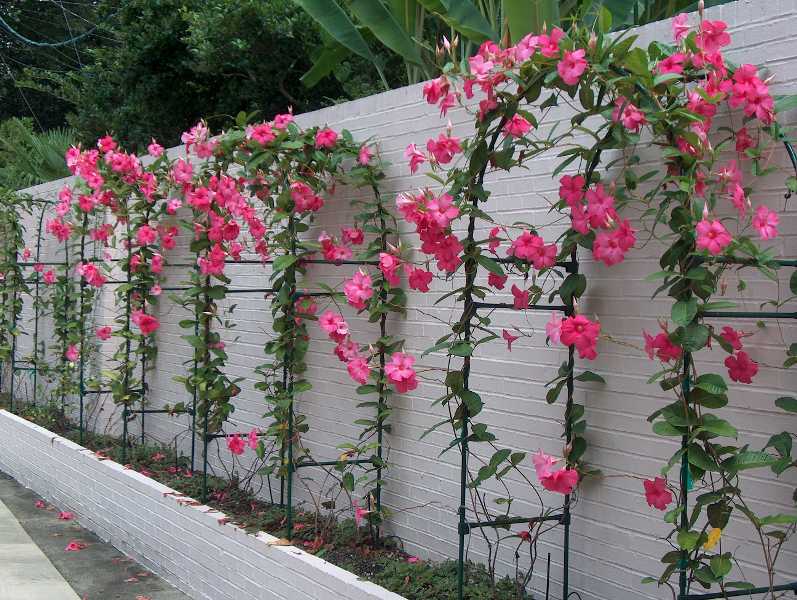
1x Hot Pink Mandevilla PlantBrazilian JasmineAlamandaClimber

Mandevilla Care Growing The Mandevilla Trellis Vine Vine Trellis

Growing Mandevilla On A Trellis Via Arlene Loewen Home Solutions

How To Grow Mandevilla Trellis Plants Flower Trellis Flowering Vines

Mandevilla Vine Love This Trellis Yard Ideas Pinterest On My

How To Grow Mandevilla In 2021 Mandevilla Vine Garden Vines Patio Pots

Pin By Liner Growers Nursery On Plants For Sring Plants White

An Urn Narrow Trellis Mandevilla Vine Planted With New Guinea

Mandevilla Care Growing The Mandevilla Trellis Vine Trellis Plants

LawnBoyz Inc Lawn Care Landscaping Inc Patio Planters Plants

Bamboo Trellis Diamond Frost Mandevilla Vine Licorice Plant
Post a Comment for "Mandevilla Trellis: A Guide for Gardeners"